









The House of Lords has again rejected the government’s efforts to introduce mandatory asset allocation powers in the Pension Schemes Bill, and is continuing to push for amendments to the scale requirement for defined contribution (DC) master trusts.
In a debate last night (20 April), peers voted to reject the government’s revised wording of the reserve power, despite attempts from Labour representatives to reassure opponents that it was designed to address a “collective action problem” in the pensions industry.
The Pension Schemes Bill will now go back to the House of Commons again for further consideration.
“It must by now be plainly obvious… that any investment that has to be forced by the government is not in the interest of savers.”
Baroness Stedman-Scott

Baroness Sherlock, the Labour peer responsible for leading the Pension Schemes Bill through the House of Lords, explained: “Providers recognise that greater diversification can benefit their members but competitive dynamics hold them back from acting on it.”
She argued that the it was “a carefully bounded power, designed for a specific and limited purpose”, adding that the government had “listened, reflected and responded with significant changes” to the original clause.
However, several peers voiced strong disagreements with the government’s stance, reiterating long-held concerns that the mandation clause was unnecessary and clashed with trustees’ fiduciary duty.
‘Poisonous’ mandation ‘must not proceed’

Peers from across the House of Lords did not hold back in their criticism of the reserve power, despite the government’s change to the wording of the bill.
Baroness Bowles, a Liberal Democrat peer who led the opposition to the reserve power, said it was “doubly, trebly and quadruply a bad thing for the government to have suggested, and I hope they will have a change of mind”.
She said: “Until this clause appeared, there was broad political and industry alignment on the direction of travel, supporting trustees to consider a wider range of assets and ensuring that the government play their part through the enablers set out in the Mansion House Accord. Nothing in that shared approach required coercion.”
“If investment has to be compelled, the signal to the wider market is not confidence, but doubt.”
Baroness Bowles
The baroness also argued that “if investment has to be compelled, the signal to the wider market is not confidence, but doubt”. The government had consistently overlooked wider market effects through its work on the clause, she added.

Conservative peer Lord Lucas said mandation was “a dead end and, at its heart, poisonous”. He argued that the reason for low levels of domestic investment – one of the reasons behind the Mansion House Accord – was “entirely down to us as politicians”.
“The solution is not to compel financial managers to do things; it is to understand what we did to make this happen and undo at least some of it,” he said.
Fellow Conservative peer Baroness Stedman-Scott – another leading voice against mandation in the House of Lords – described the reserve power as “the most serious and contentious issue” in the Pension Schemes Bill.
It “directly undermines the principle of fiduciary duty on which the entire pensions system relies”, the baroness stated, arguing that “it must by now be plainly obvious… that any investment that has to be forced by the government is not in the interest of savers”.
“We are absolutely opposed to this power, in principle and in practice,” Baroness Stedman-Scott continued. “We have met with many representatives from industry, including signatories to the Mansion House Accord… They have been crystal clear that this power crosses a line and must not proceed.”
Fiduciary duty should be ‘sacrosanct’, Lords argue
Lord Vaux of Harrowden, a crossbench peer, claimed the government’s proposed new wording of the reserve power did nothing to limit the scope of potential mandation, despite assurances from pensions minister Torsten Bell and Baroness Sherlock.
He added: “There is nothing here to prevent any future government mandating any assets they please… Government mandation of asset allocation has no place in the regulation of pensions. The fiduciary duty should remain sacrosanct.”
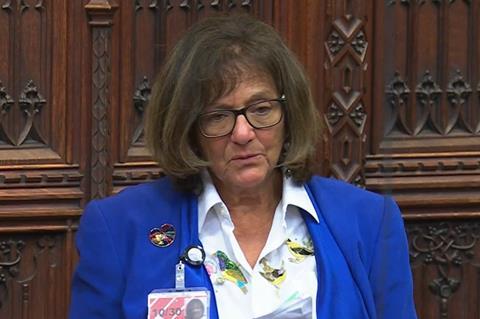
Former pensions minister Baroness Altmann cited a recent study from global consultancy group McKinsey, which had highlighted structural issues in the private equity sector, as well as recent changes to solar power pricing that have affected expected returns. The mandation clause would, she indicated, force schemes to allocate to such assets regardless of such issues and concerns.
Conservative peer Lord Remnant said: “If the government takes this reserve power, how can [it] expect anyone or any group of people in future to enter into voluntary agreements designed to be supportive of government policy if, subsequently and unexpectedly, the government can unilaterally render such voluntary commitments mandatory, with all the angst, uncertainties and disputes that that will likely entail?”
Peers also sent back amendments relating to the scale test for further consideration by MPs.