

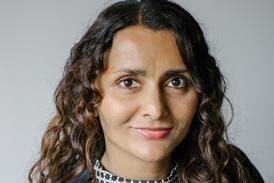
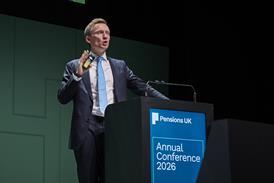






Paul Sweeting, president of the Institute and Faculty of Actuaries, delves into the role of actuaries in ensuring that post-retirement options in defined contribution pension schemes give the best outcomes possible for members.
As I argued in my last column, getting guided retirement right is not a technical exercise but a public interest obligation. It is crucial that guided retirement works with how people actually behave rather than expecting everyone to become a pensions expert.
I was therefore pleased to see the Department for Work and Pensions launch its policy consultation, which is seeking views on initial policy proposals for the implementation of guided retirement across both contract-based and trust-based pension providers. The need for this is clear: in 2025-26, around 46% of first-time pension pot accesses involved the pot being fully withdrawn.
Guided retirement would require defined contribution (DC) schemes to offer their members default pensions if no alternative choice is made. The rationale is clear: if members do nothing, the default should still lead them towards a sensible outcome.
For all but the smallest pots, those defaults would need to provide an income for life. That means dealing with longevity risk. Today, the obvious off-the-shelf solution is an annuity – either immediately or at some point in the future. Even ‘flex then fix’ approaches rely on a lifetime-income option being available eventually.

But it is also important to consider other options that could provide all or part of a guided retirement default. This could include solutions that pool longevity risk and have incomes that can rise or fall rather than being guaranteed. The obvious candidate in this regard is collective defined contribution (CDC).
Managing longevity risk is not new territory for actuaries; indeed, it is tied to some of the earliest work carried out by our profession. However, while it is for actuaries to propose and suggest solutions to the various risks in retirement, it is down to trustees and advisers to determine appropriate defaults. And, of course, engaged members remain free to choose differently.
“Our role as actuaries is not just to help put another option on the menu, but to help make sure it works. This means modelling how benefits might develop, assessing risks and implications, and supporting well-informed decisions.”
Paul Sweeting, IFoA
Our role as actuaries is not just to help put another option on the menu, but to help make sure it works. This means modelling how benefits might develop, assessing risks and the implications for different groups, and supporting those running schemes to make well-informed decisions.
It will be a busy winter for pensions professionals, with several connected consultations. We should approach them with a long-term vision for ordinary DC savers, whose lives are understandably less dominated by pensions than ours are. We need to think through whether different parts of the system combine to produce sensible outcomes for members who do not make an active choice.
The central point is that, having succeeded in getting millions of new savers saving passively through automatic enrolment, we cannot realistically expect a saver to decide what to do at the point of retirement. As pensions minister Torsten Bell recently and wryly observed, those heading towards retirement are expected to become “a combination of an actuary, a kind of accountant, and a fortune teller all at the same time”.
For most people, this is not a reasonable expectation. Pension scandals of the past surely demonstrate the need to get the planning right from the outset for guided retirement. We need better guardrails in place.
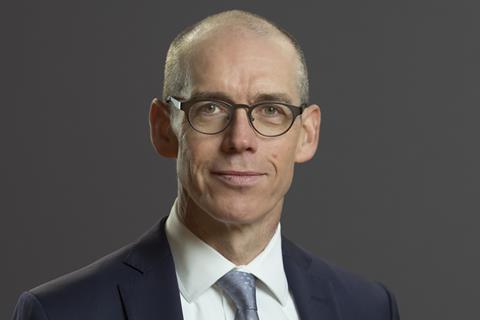
Paul Sweeting is president of the Institute and Faculty of Actuaries.