









Torsten Bell is to continue as pensions minister following the cabinet reshuffle under new prime minister Andy Burnham.
The government confirmed last night through its list of ministerial appointments that Bell would continue as a parliamentary secretary working across HM Treasury and the Department for Work and Pensions (DWP).

There had been speculation following the resignation of previous prime minister Sir Keir Starmer that a new appointment could be made to the position. Some political commentators have touted Bell as a future chancellor, after he worked with Rachel Reeves on last year’s Budget.
Bell took over from Emma Reynolds in January 2025 and has overseen the government’s ambitious and wide-ranging pensions reform agenda. He led the Pension Schemes Bill through parliament, and despite significant controversy over the ‘mandation’ clause affecting defined contribution master trusts, the bill received Royal Assent earlier this year.
The minister has also overseen – alongside the Ministry of Housing, Communities, and Local Government – a controversial reshaping of the Local Government Pension Scheme, with two asset pools closed down following a government review.
Last week, Bell announced the latest plan for enacting the various elements of what is now the Pension Schemes Act alongside other areas of legislation.
In Depth: Inside the government’s pensions policy bonanza

From Value for Money to surplus release via scale and consolidation discussions and levy arguments, last week’s roadmap announcement has given the pensions industry a lot to think about. Read the full report.
“Pension policy is a long-term game which needs focus and consistency to ensure the current reforms are implemented in a way that will deliver a sustainable, trusted retirement savings framework for the millions who depend on it in later life.”

“Torsten has shown he can deliver ambitious reform as a pensions minister, and we are glad to see him stay in post to see that through. Maintaining momentum will be critical to delivering better outcomes for savers.”

“The minister’s reappointment provides vital continuity at a time when the government must place simplicity, stability and savers at the heart of pensions policy. The PMI stands ready to work collaboratively to help deliver a system that drives confidence, fairness and long-term value for members and employers alike.”

David Brooks, head of policy at Broadstone, said: “Given the significant pensions policy agenda currently flowing through the Pension Schemes Act alongside other reforms, it is pleasing to have continuity for the sector.
“There is a big opportunity – through the expansion of collective defined contribution, unlocking surplus capital and delivering pensions dashboards to name just a few – to make a tangible difference to workers, savers, providers and UK plc.
“Pension policy is a long-term game which needs focus and consistency to ensure the current reforms are implemented in a way that will deliver a sustainable, trusted retirement savings framework for the millions who depend on it in later life.”
Zoe Alexander, executive director of policy and advocacy at Pensions UK, added: “Torsten has shown he can deliver ambitious reform as a pensions minister, and we are glad to see him stay in post to see that through. Maintaining momentum will be critical to delivering better outcomes for savers.
“We look forward to continuing our engagement with Torsten Bell and ministers across DWP and the Treasury on our shared priorities of strengthening retirement outcomes, improving pension adequacy and building a pensions system that works for both savers and the wider economy.”
Earlier this week, Pat McFadden was reappointed as Secretary of State for Work and Pensions, while former defence minister John Healey was named chancellor.
Former pensions minister welcomes ‘certainty and continuity’
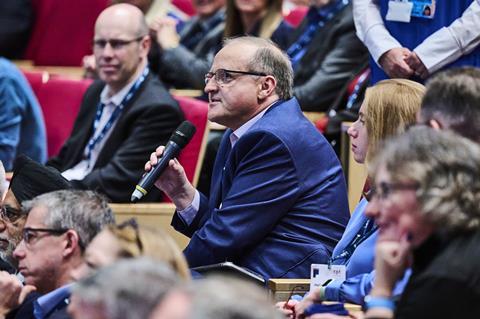
Sir Steve Webb, partner at LCP and a pensions minister for five years as part of the Conservative-Liberal Democrat coalition, said Bell’s reappointment was “good news” for the pensions industry.
“A revolving door in this key post creates uncertainty and instability in the industry,” he said. “Instead we have seen the reappointment of someone who has clearly engaged with the post and sought to bring a clear strategic direction to pensions policy.
“We can now expect to see the ‘pensions roadmap’ set out earlier in July implemented with vigour. In particular, we can expect to see new areas like retirement-only collective defined contribution schemes given continued impetus. And, once the Pensions Commission has reported early next year, it is highly likely that a new Pensions Bill will be brought forward in 2027 to implement its key findings and to set the agenda for pensions for decades to come.
“It is to be hoped that we are seeing a new and welcome era of certainty and continuity in pensions policy.”