




As the chancellor prepares to give his first Budget speech, Pensions Expert explores the key themes for the retirement sector.
Later today, John Healey will address parliament to deliver his first speech as chancellor, and the first significant fiscal event since Andy Burnham took over as prime minister.
With the UK’s finances remaining tight and inflation putting pressure on households, the government has a lot of challenges to face and few levers to pull. Here’s what we know so far and what could be announced today.
The state pension
On Monday, The Times reported that Healey was set to announce measures to keep people out of paying income tax if they rely solely on the state pension.
During the last election, the Conservative Party argued strongly that Labour would raise taxes on pensions, and this is set to become true if the tax-free allowance remains frozen while the state pension rises.
The government reportedly plans to protect pensioners whose only income is the state pension from paying income tax. However, some have already warned that such a move could create an unfair system, as those with small private pension savings could end up paying more tax.
“What looks like a relatively simple solution could become more complicated over time as the state pension continues to rise against a frozen personal allowance.”
Patrick Thomson, Standard Life Centre for the Future of Retirement
Patrick Thomson, head of research, analysis and policy at Standard Life Centre for the Future of Retirement, said: “Much will depend on the detail of the protection and who qualifies…
“What looks like a relatively simple solution could become more complicated over time as the state pension continues to rise against a frozen personal allowance, widening the difference in tax treatment between those relying on the state pension alone and those with relatively small amounts of additional retirement income.”
State pension plans could create unfair ‘cliff edge’

Plans to shield only those relying on the state pension have been criticised by some industry commentators, after reports emerged of plans to change tax rules. Former pensions minister Steve Webb has warned of a ‘cliff edge’ potentially affecting people with small private savings pots. Read more.
The change comes amid a wider debate about the adequacy and sustainability of the state pension. Research by Tideway Wealth found that three quarters of UK adults believe the state pension is not enough to live on, despite the triple lock having raised the level of payments faster than median earnings.
Tideway’s research, carried out by YouGov, found that 76% of adults who had not retired expected the state pension to be insufficient, while 77% of retirees agreed.
The triple lock is itself subject to change in the coming years, with the government planning to remove the link to wage growth and instead introduce a ‘floor’, ensuring that state pension growth at least remains at the same proportion of median earnings.
Investment incentives incoming?
Despite recent data demonstrating that pension providers are making good progress towards the Mansion House Accord’s goal of increasing UK private markets investment, the chancellor may still seek to spur more domestic allocations.
The Treasury has already announced an increase in funding for the British Business Bank and National Wealth Fund, totalling £20.4bn over the next five years.
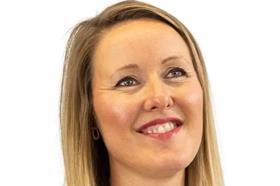
However, Helyne Slade, director and head of defined contribution (DC) investment at Isio, said ongoing reforms stemming from the Pension Schemes Act could mean additional measures in the Budget would be “premature”.
“Rather than simply directing more pension capital towards domestic assets, the government should prioritise creating the conditions for a broader range of attractive investment opportunities offering competitive risk-adjusted returns,” Slade said. “Supporting UK growth and protecting savers’ interests should go hand in hand.”
Reassuring the bond markets
Since the now-infamous ‘mini-Budget’ of 2022 spooked gilt markets and triggered huge selloffs in government bonds, the impact of the chancellor’s speech on fixed income prices has taken centre stage.
A broad selloff in bonds has pushed gilt yields higher, eroding some of the UK’s “headroom” against its spending limits. Chris Arcari, head of capital markets at Hymans Robertson, said this could lead to a “relatively low-key Budget”.

“Large unfunded spending commitments, or changes to the fiscal rules designed simply to accommodate additional borrowing, would likely be received negatively.”
“Some reduction in headroom may be acceptable to markets, particularly where it reflects temporary adverse developments such as the current energy price shock,” Arcari said.
“However, large unfunded spending commitments, or changes to the fiscal rules designed simply to accommodate additional borrowing, would likely be received negatively. The government has so far committed to retaining the existing fiscal rules.”
At the same time, bringing gilt yields down would likely require higher taxes, Arcari added, which would go against Labour’s manifesto pledge not to raise major taxes on individuals.
“Those commitments significantly restrict the available tax base, while social care and other spending priorities continue to create pressures,” he continued. “More fundamental reform of the UK tax system may therefore require the government to seek a fresh electoral mandate.”
A scarcity of speculation
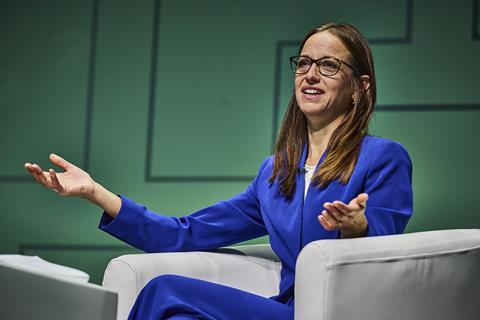
The build-up to this year’s Budget speech has been notable for the lack of leaks and speculation (so far). Many in the pensions industry urged the government to change its approach after months of rumours resulted in thousands of people withdrawing money from their pension savings early.
Earlier this month, shadow pensions minister Helen Whately called on the government to rule out pension-related tax increases.
Tom Selby, director of public policy at AJ Bell, noted that there had been “mercifully little speculation” this year, meaning less activity from people making what can be irreversible decisions.
Some news outlets reported over the weekend that there were no plans to make changes to the tax-free lump sum, but Selby said the chancellor could “go further by locking in long-term stability for pension savers”.
“A pledge not to alter tax relief or tax-free cash entitlements for the long-term would give savers the confidence to plan for the long-term and put an end once-and-for-all to Budget-driven instability,” Selby added.
“This would have put the government squarely on the side of people who do the right thing and save for retirement, support UK capital markets and, crucially, wouldn’t cost the Exchequer a penny.”

Chris Eastwood, CEO and co-founder of pension provider Penfold, also called for the government to rule out changes to pension tax relief and the tax-free lump sum for the duration of the current parliament.
He said: “Stability is the foundation of retirement saving. Pensions work on a simple promise: people put money away for decades, trusting that the tax rules will broadly hold when they retire. Unexpected changes to those rules, or even rumours of them, make that trust harder to keep.”
‘Breathing space’ and ‘fresh hope’
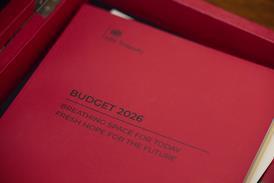
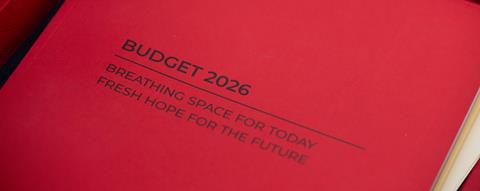
In a video released last night ahead of the Budget, John Healey said his speech and report would aim to deliver “breathing space for today and fresh hope for the future”.
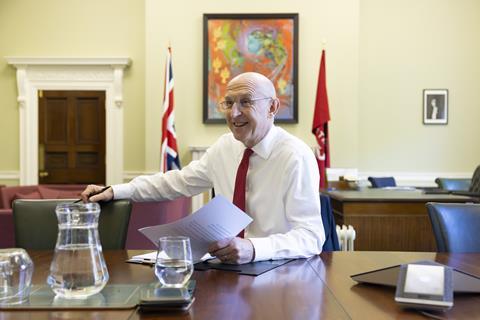
“The world’s a highly uncertain place,” the chancellor stated. “Conflicts abroad are pushing up energy prices, and the cost of living here at home – piling pressure on families, on businesses, and on our public finances.
“But Britain’s economy is showing real signs of resilience: investments up, productivity is growing, and we had the joint fastest growth in the G7 in the first half of this year.
“We can’t stop these shocks that hit Britain, but we can make Britain more resilient when they do.”
He said he would “back British businesses and entrepreneurs” and invest in technology, while also building more houses and promoting devolution to “drive growth in every postcode”.
Healey, the former defence secretary under previous prime minister Sir Keir Starmer, also confirmed that he would seek to “strengthen national security and our defences”.
“We’ll do all of this responsibly, sticking within tight fiscal rules, and make sure every pound is well invested,” Healey said. “Because this Budget is about getting through this difficult moment. But it’s also about putting Britain on a better future path.”